Building Health, Building Opportunity
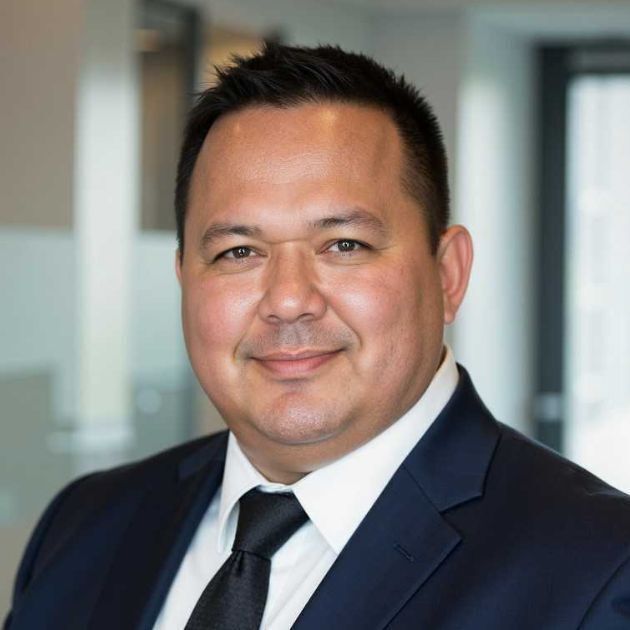
Based in Jackson, Wisconsin and owned by Ron “Hawk” Spoerl (Little River Band of Ottawa Indians), Aambé Health partners with Tribal Nations to strengthen healthcare systems while creating opportunities for economic development, workforce growth, and community well-being. With Tribal sovereignty and long-term sustainability at the center of its work, Aambé’s vision is to help Tribes build healthcare systems that serve their communities for generations to come.
The National Center asked Ron “Hawk” Spoerl to share his vision and what Aambé's work means for Tribal communities. Take a few minutes to learn more about their work in healthcare, and visit https://www.aambe.com to dive deeper.
Can you tell us a little about Aambé Health and your mission of partnering with Tribal Nations to strengthen healthcare in Native communities? Where are you currently working?
Aambé Health is a Native-focused healthcare company built around a simple idea: Tribal Nations should have the ability to control, strengthen, and build sustainable healthcare systems for their own people.
Aambé means “Let’s Go!” in Ojibwemowin, and that spirit captures who we are. Our mission is to work alongside Tribal Nations—not simply as a vendor, but as a long-term partner—to help Tribes expand access to care, strengthen their healthcare infrastructure, improve financial sustainability, and ultimately create healthier communities for the next seven generations.
We believe healthcare in Indian Country has to be about more than putting a clinic in a building. It has to be about building an entire healthcare ecosystem that a Tribe can own, control, and sustain.
Aambé Health provides comprehensive support across that ecosystem, including clinic development and management, primary and urgent care, staffing, pharmacy services, 340B strategy, operational management, technology, revenue-cycle support, employee health, facility planning, and other services that allow a Tribal healthcare enterprise to function efficiently and grow.
One thing that makes Aambé different is that we understand every Tribal Nation is different. There is no one-size-fits-all healthcare model. We work within each Tribe's sovereignty, leadership structure, community needs, existing healthcare resources, and long-term economic goals.
Our vision is to help Tribal Nations move from simply receiving healthcare services to building healthcare systems of their own—systems that can create jobs, retain healthcare dollars within the community, improve access, and generate sustainable resources that can be reinvested in the Tribe.
Technology and data sovereignty are also increasingly important. Our partnership with NextGen Healthcare is an example of how we're bringing modern healthcare technology and electronic health record capabilities to Tribal healthcare while keeping Tribal sovereignty and control of healthcare data at the center of the model.
Our work is developing into a national Tribal healthcare platform, and we are currently engaged with Tribal Nations and healthcare opportunities across multiple regions of Indian Country.
Our relationships and projects have included Tribal Nations in the Southwest, California, New Mexico, Wisconsin, and other parts of the country, with an expanding pipeline of Tribal healthcare projects. We are working with Tribes at different stages—from Nations evaluating their healthcare strategy and pursuing federal authorities and funding, to Tribes developing clinics and pharmacies, to existing healthcare operations looking for better management, technology, pharmacy, and financial solutions.
We have also been developing relationships with organizations that support Tribal healthcare and economic development because we believe the opportunity is much larger than any single clinic.
Ultimately, our goal is ambitious: We want to help build a stronger healthcare infrastructure across Indian Country—one Tribal Nation at a time.
We don't believe Aambé should come in, build something, and walk away. We want to build it with the Tribe, operate it with the Tribe, measure the results with the Tribe, and help create an enterprise that belongs to the Tribe and can serve its people for generations.
That is what we mean when we talk about health sovereignty, economic sustainability, and healthcare “done right.”
Aambé Health works alongside Tribal leadership to develop clinics and pharmacies. What makes this collaborative approach so important?
The collaborative approach is essential because we are not building healthcare for Tribal Nations—we are building healthcare with Tribal Nations.
Every Tribe is different. Every community has different healthcare needs, leadership priorities, resources, geography, and goals for the future. A model that works for one Tribal Nation may not work for another.
That's why we start by listening.
We sit down with Tribal leadership and ask: What does your community need? What is working today? What isn't working? What do you want your healthcare system to look like five, ten, or twenty years from now?
Then we build the strategy together.
That distinction is incredibly important because healthcare is directly connected to Tribal sovereignty. The Tribe should have a voice in how healthcare is designed, how it operates, where resources go, how data is managed, and how the enterprise grows. Our technology partnership with NextGen Healthcare, for example, was specifically structured around the principle of Tribal data sovereignty and helping Tribes maintain control of their healthcare information.
Aambé brings healthcare expertise, operational experience, pharmacy resources, technology, business development, and knowledge of the federal healthcare environment. The Tribe brings the most important piece: knowledge of its own people and community.
When those two things come together, we can create something much stronger than either could create independently.
We also believe that the Tribe should ultimately have the opportunity to build an asset—not simply purchase a service.
A clinic can become a long-term Tribal healthcare enterprise. A pharmacy can become an important economic and healthcare resource. Revenue generated through the healthcare system can help support additional services and reinvestment in the community.
That is why our conversations aren't limited to, “How do we open a clinic?”
We ask much bigger questions:
- How do we create access to care?
- How do we improve outcomes?
- How do we recruit and retain good people?
- How do we make the operation financially sustainable?
- How do we maximize available federal programs and healthcare resources?
- How do we keep more healthcare dollars within the Tribal community?
- How do we build something that can still be serving Tribal citizens generations from now?
The collaborative model also creates accountability. Tribal leadership remains involved in the vision and governance, while Aambé brings the specialized resources and operational capabilities necessary to execute the plan.
Ultimately, the Tribe owns the vision. Aambé helps build the pathway to get there.
That's really the philosophy behind Aambé: listen first, build together, respect sovereignty, execute well, and create something sustainable for the next seven generations.
That is much more powerful than simply opening another clinic.
How do healthcare projects like these create long-term benefits beyond patient care, such as local jobs, workforce development, and economic opportunity?
One of the things we get most excited about at Aambé is that a Tribal healthcare project can become much more than a clinic or a pharmacy. It can become an economic engine for the community.
When a Tribe invests in its healthcare infrastructure, we're not just creating a place where people receive medical care. We're creating an enterprise that can employ people, develop careers, bring new skills into the community, and keep healthcare dollars circulating within the Tribal economy.
The opportunity starts with the construction and development of the facility itself. There are architects, engineers, contractors, construction workers, electricians, plumbers, technology companies, equipment suppliers, and other businesses involved in bringing a healthcare facility to life. Once the facility opens, the economic impact continues through clinical positions, pharmacy, administration, billing, information technology, maintenance, transportation, environmental services, community health, and many other jobs.
But we want to go further than simply filling positions. We want to help create career pathways.
A young person in a Tribal community might start in an entry-level healthcare position and eventually become a medical assistant, nurse, pharmacist, healthcare administrator, information technology professional, or even a physician. We want Tribal healthcare enterprises to create opportunities for people to build careers without having to leave their communities.
That's particularly important because workforce shortages are one of the biggest challenges facing healthcare in Indian Country. IHS reported a nearly 30% vacancy rate in early 2026 and launched the largest hiring initiative in its history to address workforce needs. IHS has specifically emphasized the importance of Tribal colleges and universities and career pathways for the next generation of healthcare professionals.
We also believe in building relationships with Tribal colleges, schools, workforce-development organizations, and community programs so that healthcare projects can create a pipeline from education to employment.
There is also a tremendous opportunity to develop positions that don't require someone to leave the community for years to get started. Community Health Representative and community-based health programs demonstrate how local residents can be trained to provide culturally grounded services within their own communities.
A successful Tribal healthcare enterprise can also keep more healthcare spending within the community. Instead of sending patients, prescriptions, services, jobs, and dollars somewhere else, the Tribe can build an ecosystem where more of those dollars stay home and are reinvested in the community.
That creates a multiplier effect:
Healthcare creates jobs.
Jobs create income.
Income supports families.
The enterprise creates additional economic activity.
Successful healthcare operations can generate resources that can be reinvested into additional Tribal priorities.
That's the bigger vision we have at Aambé.
We're not just asking, “How many patients can we see?” We're asking:
- How many people can we employ?
- How many careers can we create?
- How many young people can we put on a healthcare career pathway?
- How much healthcare spending can we keep within the Tribal economy?
- How many Tribal-owned businesses can participate?
- How can the healthcare enterprise become financially sustainable for generations?
That is why we describe our work as healthcare and economic development working together.
The ultimate goal isn't simply to build a clinic that serves today's patients. It's to help a Tribal Nation build an asset that creates health, opportunity, careers, and economic strength for the next seven generations.
That is the kind of impact we believe healthcare can have when the Tribe is in the driver's seat and the project is designed as a long-term Tribal enterprise.
Your work extends beyond clinics and pharmacies to include preventive care, behavioral health, and veteran services. Why is it important to take this comprehensive approach to community wellness?
Because people don't experience their health in departments.
A person doesn't wake up one morning and say, “Today I have a physical health problem, but that's separate from my mental health, my nutrition, my family, or the stress I'm carrying.” All of those things are connected.
That's why I believe healthcare in Tribal communities has to look at the whole person and the whole community, not simply the illness that brings someone through the clinic door.
But I also believe there is a much bigger opportunity here for Tribal Nations. I believe Tribes should lead—not only within their own communities, but in the communities around them. Healthcare is one of the greatest ways a Tribal Nation can demonstrate that leadership.
Think about what happens when a Tribe says, “We're going to take care of our people, and we're also going to help take care of the people around us.” That changes the conversation.
Our shared mission at Aambé is to help Tribal Nations redefine what their mission can be: to give and to serve the community around us.
That doesn't diminish Tribal sovereignty. It strengthens it.
A Tribe that has a strong healthcare system can become a healthcare leader in its region. It can create jobs, train people, support veterans, provide behavioral health services, improve access to preventive care, address nutrition and chronic disease, and partner with neighboring communities, hospitals, healthcare organizations, schools, businesses, and government agencies.
And suddenly, the Tribe isn't simply asking, “What can somebody do for us?” The Tribe is saying: “What can we do for our people—and what can we do for the community around us?”
I think that is incredibly powerful.
If we only treat people when they are sick, we're constantly playing defense. We want to move toward prevention, early intervention, education, wellness, nutrition, behavioral health, and helping people stay healthy in the first place.
That means primary care and preventive screenings, chronic disease management, behavioral health, pharmacy services, nutrition and healthy food access, supporting families, helping our veterans, and creating opportunities for our young people and dignity for our elders.
All of those pieces work together. Healthcare becomes the front door to community wellness.
But it can also become the front door to something bigger: community leadership and economic opportunity.
When a Tribe builds a strong healthcare enterprise, it can create careers and workforce-development opportunities, bring healthcare dollars into the community, create partnerships, support Tribal businesses, and train the next generation of leaders.
Most importantly, it can create a culture of service.
That's the part that really matters to me.
When we give and serve the community around us, we build a better Tribe. When we build a better Tribe, we strengthen our leaders. When we strengthen our leaders, we create more opportunity. And when we create opportunity that can be sustained and passed down, we're building something for the next seven generations.
That's how I think about Aambé Health.
We're not simply trying to build more clinics. We're trying to help Tribal Nations build stronger communities, stronger leaders, stronger economies, and stronger futures.
And I believe one of the best ways to do that is through healthcare—because healthcare touches everyone.
A clinic treats patients. But a Tribal Nation that chooses to lead through healthcare can serve an entire community.
That's the opportunity I see for Aambé: to work alongside Tribal Nations to help them lead, give, serve, and create a legacy that lasts for the next seven generations.
How does Aambé Health ensure that each project reflects the priorities, goals, and vision of the Tribal Nation it serves?
The first thing we do is listen.
We don't walk into a Tribal Nation with a finished healthcare model and say, “This is what you need.” That isn't our philosophy, and frankly, it wouldn't work.
The Tribe knows its people better than anyone. Tribal leadership understands the community, its history, challenges, culture, strengths, and aspirations. Our job is to bring the healthcare expertise, operational experience, technology, relationships, and resources to help turn that vision into something that can actually be built and sustained.
So we start by asking questions:
- What does the Tribe want healthcare to look like?
- What does the community need today?
- Where do you want to be five, ten, or twenty years from now?
- What is already working?
- What isn't working?
- What are your biggest challenges?
- What opportunities do you see?
- Most importantly, what does success look like to you?
Those conversations shape the project.
We also recognize that every Tribal Nation is different. One Tribe may need a new clinic and pharmacy. Another may need to strengthen an existing healthcare operation. Another may be focused on behavioral health, veterans' services, nutrition, workforce development, or creating a sustainable healthcare enterprise.
There isn't a cookie-cutter answer. Aambé adapts to the Tribe—not the other way around.
We also believe Tribal leadership needs to remain involved throughout the process. We want leadership to understand the strategy, economics, operational plan, opportunities, and challenges so the Tribe can make informed decisions and have ownership of the direction.
That is particularly important because healthcare is ultimately connected to Tribal sovereignty and self-determination.
We aren't trying to replace Tribal leadership. We're trying to make Tribal leadership stronger.
Aambé brings the experience and infrastructure to help navigate the complicated healthcare environment—federal programs, reimbursement, pharmacy, 340B, staffing, technology, operations, compliance, financing, and business development.
But the Tribe decides where it wants to go.
I often think of it this way:
- The Tribe owns the vision.
- Aambé helps build the roadmap.
- Together, we execute the plan.
- That relationship has to be built on trust.
Working with Tribal Nations requires patience, humility, flexibility, and grace. Sometimes the process takes longer than we expect. Tribal leadership changes. Priorities change. Circumstances change. We have to be willing to listen, adjust, and keep moving forward.
That's part of what makes working in Indian Country different—and it's something we respect.
Our goal isn't to come in, complete a project, collect a fee, and leave. We want to build relationships that last.
Because when we talk about our mission to give and serve, we're talking about more than providing healthcare services. We're talking about helping Tribal Nations create something that belongs to them and continues to create value long after Aambé is involved.
If we do our job correctly, the end result isn't an Aambé project.
It's the Tribe's project.
It's the Tribe's healthcare enterprise.
It's the Tribe's workforce.
It's the Tribe's economic opportunity.
It's the Tribe's leadership legacy.
And ultimately, it's something that can serve the community for generations.
That's how we make sure the project reflects the Tribe's priorities, goals, and vision: we don't start with what Aambé wants to build. We start with what the Tribe wants to become.
Then we work together to build the path to get there.
One of your long-term goals is creating pathways for Tribal citizens to become healthcare professionals in their own communities. Why is workforce development such an important part of your vision?
Because you can't build a sustainable healthcare system if you don't build the people who will lead it.
We can build beautiful clinics, pharmacies, bring in technology, and create sophisticated healthcare systems. But if, twenty years from now, the people running those organizations still have to come from somewhere else, then we haven't fully accomplished what we're trying to accomplish.
Our long-term vision is to help Tribal Nations develop their own healthcare workforce.
Imagine a young Tribal citizen who walks into one of our clinics today and sees a Tribal nurse, pharmacist, physician, healthcare administrator, or behavioral-health professional.
That young person can look at that individual and say:
“I can do that.”
That's incredibly powerful.
So we're interested in creating pathways—not just jobs.
That can start with introducing young people to healthcare careers while they're still in school. It can include internships, apprenticeships, scholarships, mentorships, and partnerships with Tribal colleges and universities, community colleges, universities, nursing programs, pharmacy schools, medical schools, and other educational institutions.
Then we want to create opportunities for people to come back home and practice.
We want the young person who leaves the community to get educated to have a reason—and an opportunity—to come home.
That creates a powerful cycle.
A Tribal citizen becomes a healthcare professional. They return to their community. They serve their people. They become a mentor. The next generation sees them. Another young person decides to pursue healthcare.
And the cycle continues.
That's how you build a workforce that becomes stronger with every generation.
There is also a tremendous economic opportunity. Healthcare careers can provide stable, meaningful employment and create a pathway into the middle class and beyond. More importantly, those wages and skills stay closer to home, knowledge stays in the community, and leadership capacity grows within the Tribe.
Eventually, you aren't just developing healthcare workers. You're developing Tribal leaders.
A nurse can become a clinical director. A pharmacist can become a pharmacy executive. An administrator can become a healthcare CEO. Someone who starts in an entry-level position can eventually become the person responsible for leading an entire Tribal healthcare enterprise.
That's what excites me.
Because when we talk about Tribal sovereignty, I don't think sovereignty is just about owning the building or having the authority to make a decision. Sovereignty is also having the people, knowledge, skills, and leadership capacity to control your own future.
That's why workforce development is so important.
We want to help create an environment where Tribal citizens aren't just recipients of healthcare—they become the people providing it, managing it, innovating it, and leading it.
We want Tribes to become places where young people can see a future.
Where they can say:
- “I can build my career here.”
- “I can serve my people here.”
- “I can raise my family here.”
- “I can become a leader here.”
- “And I can make a difference here.”
That's much bigger than workforce development.
That's nation-building.
And if we can help create that kind of pathway today, the person we help educate may eventually educate the next generation.
That's the seven-generation thinking that drives us.
We're not asking, “How many employees can we hire this year?” We're asking:
“How do we build the healthcare leaders of the next generation—and the generation after that?”
Because ultimately, the greatest asset a Tribal Nation can build isn't a building.
It's its people.
- Looking ahead, what excites you most about the future of Tribal healthcare and Aambé Health's role in helping Tribal communities thrive?
What excites me most is that I believe we are at the beginning of a very different chapter for Tribal healthcare.
For generations, Tribal Nations have often had to work within healthcare systems that were designed by the Federal Government and were not designed for all communities.
I believe we're moving toward a future where Tribal Nations increasingly say:
“We are going to design our own healthcare future.”
And that's incredibly exciting.
At Aambé, we want to be part of that movement—not by telling Tribes what their future should look like, but by helping them build the future they envision.
I see Tribal healthcare becoming much more than a clinic. I see healthcare becoming a platform for sovereignty, leadership, economic development, workforce development, technology, and community service.
Imagine Tribal Nations with healthcare systems that are financially sustainable, technologically advanced, culturally connected, and capable of serving not only their own citizens but the communities around them.
Imagine a future where Tribal citizens become the doctors, nurses, pharmacists, behavioral-health professionals, administrators, technologists, and healthcare executives who lead those systems.
Imagine young people growing up seeing healthcare careers as an opportunity to stay home, serve their people, build a family, and become leaders.
Imagine Tribal healthcare enterprises creating jobs, supporting Tribal businesses, attracting investment, and keeping more healthcare dollars within the community.
That's the future I see.
And I believe technology is going to accelerate that opportunity.
Artificial intelligence, data analytics, modern electronic health records, precision medicine, remote care, and other technologies can dramatically change how healthcare is delivered. But we have to make sure that Tribal Nations aren't simply consumers of that technology. They need to be owners and leaders in it.
That's one of the reasons our work around Aambé AI and Tribal data sovereignty is so important to us. The data generated by Tribal citizens and Tribal healthcare systems is incredibly valuable. We believe Tribes should have a meaningful voice in how that data is protected, governed, and used.
But ultimately, the technology is only a tool.
The people are the mission.
That's why I keep coming back to our philosophy of give and serve.
I believe Tribal Nations have an opportunity to lead in a different way—to lead by serving.
We can take care of our people. We can take care of our elders. We can support our veterans. We can invest in our young people. We can create healthcare careers. We can help our neighbors. We can build stronger communities.
And when we do that, something extraordinary happens.
We build a better Tribe. When we build a better Tribe, we strengthen our leaders. When we strengthen our leaders, we create opportunity. When we create opportunity, we give the next generation a better starting point than we had.
And that is what the seven-generation philosophy means to me.
We're not building for the next election cycle. We're not building simply for the next five years. We're building for people we will never meet—the great-grandchildren of the children being born today.
That's the standard I want Aambé to hold itself to.
I don't want people to look back twenty or thirty years from now and simply say, “Aambé helped build some clinics.”
I want them to say:
“Aambé helped Tribal Nations believe in what was possible.”
That we helped Tribes build stronger healthcare systems.
That we helped create careers.
That we helped develop leaders.
That we helped keep opportunity within Tribal communities.
That we helped Tribes serve not only their own people, but the communities around them.
And that we were willing to walk alongside Tribal leadership, be patient, adapt when necessary, and keep moving forward.
Because that's what Aambé—“Let's Go!”—means to me.
It means let's go build something.
Let's go serve.
Let's go create opportunity.
Let's go strengthen our communities.
Let's go develop the next generation of leaders.
And let's go build something that will still matter seven generations from now.
That's what excites me most about the future.
The opportunity isn't just to improve Tribal healthcare. The opportunity is to help Tribal Nations redefine what is possible.
-###-